Life on the Road Before the WPBL: Travel, Recovery and the Reality of Pro Women’s Baseball
The WPBL’s inaugural 2026 season begins on August 1, 2026, with teams representing Boston Hunters, Los Angeles Queens, New York Heights and San Francisco Firebells. The season is scheduled at Robin Roberts Stadium in Springfield, Illinois, with 30 regular-season games followed by playoffs.
Before fans see the first pitch, many WPBL players have already done weeks of work no one sees.
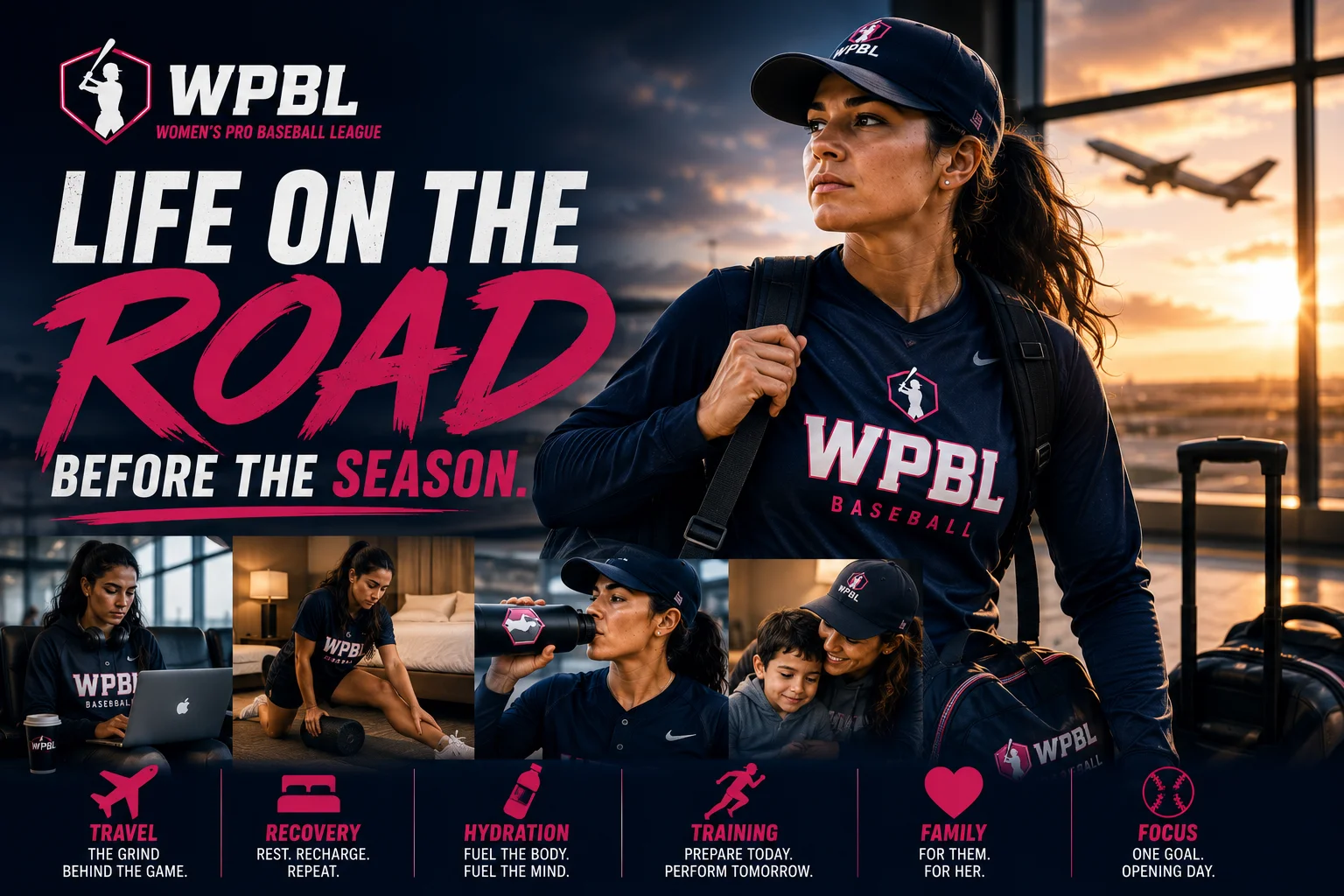
That work does not always look like a clean training montage. Sometimes it looks like airports, hotel rooms, delayed flights, sore bodies, short sleep, laundry, hydration, family calls, workouts squeezed into small windows and trying to stay ready while life keeps moving.
That is the reality behind professional women’s baseball.
The WPBL’s first season will be judged by what happens on the field. But before players reach that stage, they have to manage the road that gets them there.
Table of Contents
The Season Starts Before Opening Day
For fans, the season begins when the first game starts.
For players, the season begins much earlier.
They have to prepare their bodies, keep their timing, manage travel, recover from other commitments, stay mentally sharp and handle media or fan responsibilities before the official schedule begins.
That is especially true in a first-year league.
There is no old routine for the WPBL yet. Players are preparing while the league is also introducing itself. That creates a different kind of workload. They are not only getting ready to compete. They are also helping build the public face of the league.
That makes the weeks before opening day more demanding than they may look from the outside.
Frequent Travel Is Part of the Reality
Travel is one of the clearest parts of the pre-season grind.
Some WPBL players are moving between baseball commitments, public events, training opportunities, family responsibilities and league-related appearances. That can mean flights, rental cars, hotel nights, delayed arrivals and short windows at home before leaving again.
Travel is not just inconvenient. It affects preparation.
A player’s body feels a long travel day. Sleep changes. Meals change. Hydration changes. Recovery time disappears. A workout may have to be adjusted. A player may arrive with little time to settle in before stepping onto a field or appearing in front of fans.
That is part of the job, but it still matters.
Professional athletes have to perform even when the schedule is not perfect.
Hotels, Flights and Delayed Schedules
The road version of baseball is not glamorous.
A player may wake up in a hotel and need a minute to remember what city she is in. She may deal with a delayed flight that changes the next day’s routine. She may land late, sleep less than planned and still show up for baseball activity the next morning.
That kind of schedule can wear on anyone.
For athletes, the challenge is staying ready anyway.
The public may see smiles, uniforms, interviews and clean photos from an event. What they may not see is the travel behind it: the missed sleep, the airport food, the rushed arrival, the body stiffness, the need to reset quickly and the quiet work of staying professional.
That is why travel management is a real skill.
Recovery Is Not Optional
Recovery is not a luxury for baseball players. It is part of performance.
Before the WPBL season, recovery can include massage, stretching, hydration, sleep, treatment, nutrition, rest days, mobility work and simply getting off the feet when possible.
The challenge is finding time for it.
When a player is moving between cities, events, training and personal responsibilities, recovery can easily get pushed aside. But if fatigue builds before the season even begins, it can affect timing, energy and health.
That is why body care matters.
A player who treats recovery as part of preparation gives herself a better chance to handle the season once games begin.
Hydration, Sleep and Body Care
The basics are not exciting, but they matter.
Hydration matters because travel, heat, long days, workouts and fan events can drain players quickly. Sleep matters because recovery does not happen properly without it. Body care matters because baseball movements repeat: swings, throws, squats, sprints, cuts, slides and long hours on the field.
When the schedule gets chaotic, the basics become harder to maintain.
That is where professionalism shows up.
Players have to keep drinking water, eating enough, sleeping when they can, stretching, treating soreness and listening to their bodies. Those habits may not make headlines, but they help determine who can stay consistent.
The Mental Load of Constant Movement
Travel affects the mind too.
A crowded schedule can create mental fatigue. Players may be thinking about the next flight, next workout, next appearance, next family responsibility, next interview, next practice or next chance to recover.
That mental load can build quietly.
Athletes are often expected to adjust quickly and keep smiling. But behind the scenes, constant movement can make it harder to feel settled.
That is why mental organization matters.
Players need ways to reset. Some may rely on routines. Some may need quiet time. Some may call family. Some may journal, stretch, nap, listen to music or simply take a walk.
Staying mentally ready is part of staying physically ready.
Balancing Family, Relationships, Pets and Baseball
Players do not stop having normal lives because a season is coming.
They may be balancing family, partners, children, pets, work, coaching, personal responsibilities and travel. Some may only get short stretches at home before leaving again. Others may be managing relationships across different sports schedules or trying to stay connected with loved ones while moving constantly.
That part of the story matters because it makes the WPBL more human.
These players are not only athletes waiting for opening day. They are people with full lives. They are carrying responsibilities that do not pause for training camp or public events.
Balancing all of that takes effort.
It also shows how much the league means to players who are willing to fit baseball into already busy lives.
Staying Ready While Life Is Chaotic
One of the hardest parts of pre-season life is staying ready when nothing feels consistent.
A player may not always have the same gym, field, bed, food, schedule or recovery setup. She still has to find ways to train, throw, hit, move, rest and stay focused.
That is the difference between wanting to be ready and actually being ready.
Being prepared is not only about ideal conditions. It is about adapting when conditions are messy.
That could mean doing mobility work in a hotel room. Getting sleep on a travel day. Eating well when options are limited. Finding a cage or field when possible. Taking recovery seriously during the only free afternoon of the week.
Those small choices add up.
Why Routine Matters for WPBL Players
Routine gives athletes stability.
A regular bed, regular meals, familiar field, predictable workout window and consistent recovery plan can help players feel grounded. Routine also reduces decision fatigue. When players know what the day looks like, they can focus more on baseball.
That is why reaching the season location can matter.
After weeks of travel and scattered commitments, being in one place can help players settle into a rhythm. They can learn the field, build daily habits, work with teammates and focus on the season instead of constantly planning the next move.
Routine does not remove pressure.
But it can make pressure easier to manage.
For WPBL players entering a first-year league, routine may become one of the most valuable parts of the season.
What Fans Usually Do Not See
Fans usually see the visible parts.
They see the game. The uniform. The swing. The pitch. The photo. The interview. The final score.
They do not always see the road behind it.
They do not see the delayed flight, the late hotel check-in, the sore shoulder, the short night of sleep, the recovery appointment, the missed family time, the rushed meal, the mental reset or the quiet decision to keep going when the body is tired.
That behind-the-scenes work does not excuse performance. Professional athletes still want to compete and be judged by the game.
But it gives fans a fuller picture.
The WPBL is not only a league of rosters and schedules. It is a league of women bringing real lives, real bodies and real pressure into a new professional baseball space.
Travel Toughness Can Help, But It Does Not Guarantee Success
Travel can build toughness.
Players who have handled airports, hotels, delays, public appearances and changing schedules may become more adaptable. They may learn how to reset faster. They may become better at staying calm when plans change.
That can help in a first-year league.
But travel toughness does not guarantee performance.
The WPBL will still require hitting, pitching, defense, communication, health, team chemistry and smart coaching. A player who travels well still has to produce when the game starts.
That balance is important.
Behind-the-scenes grind is part of the story, but the season will still be decided on the field.
Why This Reality Matters for Women’s Baseball
The road before the WPBL shows something important about women’s baseball.
Many players have already been living demanding baseball lives without the long-established professional structure that men’s baseball has. They have balanced other leagues, national-team opportunities, coaching, jobs, family, travel and training while still trying to stay sharp.
The WPBL gives those players a more visible stage.
That does not make the work easier overnight. But it does give the work a clearer destination.
When fans understand what players are carrying into the season, they can appreciate the league more fully. Not just as a schedule, but as a place where years of effort, travel, recovery and persistence finally meet a professional opportunity.
Conclusion
Life on the road before the WPBL is not always clean or easy.
It can mean flights, hotels, delayed schedules, short sleep, recovery work, hydration, family responsibilities, mental fatigue and the constant challenge of staying ready while life is chaotic.
That is the hidden side of professional women’s baseball.
Fans will judge the season by what happens on the field, and that is fair. But the road to the field matters too. It shows how much work players put in before the first pitch and how much discipline it takes to arrive ready.
The WPBL’s first season will begin on opening day.
For many players, the grind started long before that.