WPBL Draft Explained: How Teams Built Their First Rosters
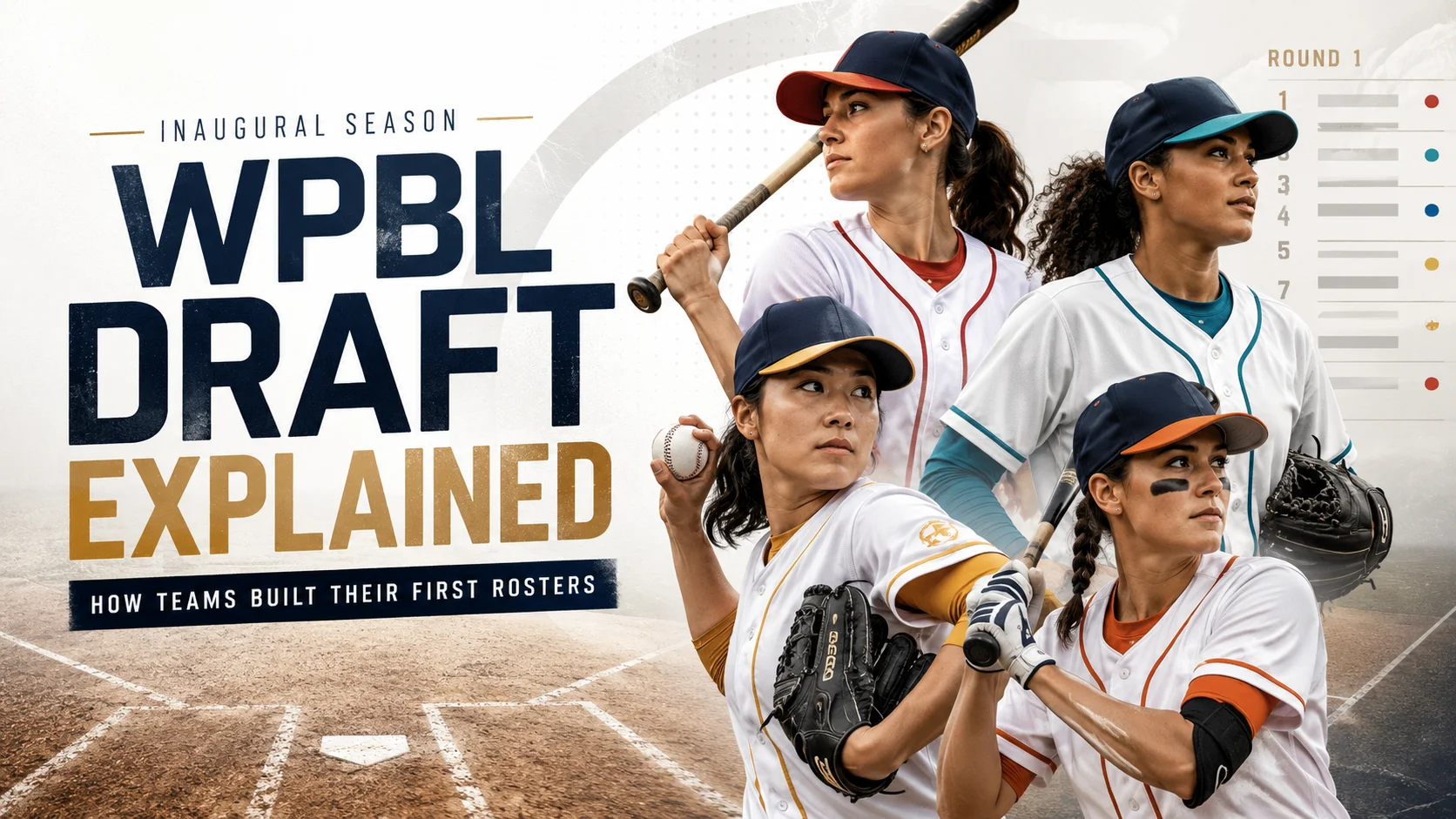
The WPBL Draft was the player selection process that helped build the first rosters in Women’s Pro Baseball League history.
Before the league could play its first game, it needed teams. Before those teams could feel real, they needed players. The inaugural draft turned open tryouts and player evaluation into four founding rosters: Boston Hunters, Los Angeles Queens, New York Heights and San Francisco Firebells.
That made the first WPBL Draft more than a list of picks. It was the moment the league began taking shape as a real baseball competition.
Table of Contents
WPBL Draft Quick Facts
| Draft element | What it means | Why it matters |
| League | Women’s Pro Baseball League | The draft helped build the league’s first professional rosters |
| Teams involved | Boston Hunters, Los Angeles Queens, New York Heights and San Francisco Firebells | These four teams formed the league’s inaugural structure |
| Player entry path | Open tryouts and draft evaluation | Gave players a formal route into the league |
| Roster size | 20 players per team | Forced teams to build balanced baseball rosters, not just select big names |
| First overall pick | Kelsie Whitmore | Created the first major draft landmark in WPBL history |
| Main purpose | Build inaugural rosters | Gave fans teams, players and early storylines to follow |
What Was the WPBL Draft?
The WPBL Draft was the inaugural player selection process for the Women’s Pro Baseball League.
Its purpose was simple: assign players to teams and create the first rosters before the league’s opening season.
For a new league, that step matters. A schedule is not enough. Fans need rosters. Teams need identity. Players need a team home. Coaches need groups they can prepare. The draft helped organize all of that.
It also gave the league its first real sports conversation. Once players were drafted, fans could start asking normal baseball questions: Which team has strong pitching? Who has defensive depth? Which players bring Team USA or national-team experience?
Which rookies or less-known names should people watch?
That is how a new league starts to feel real.
Why the First WPBL Draft Mattered Historically
The first WPBL Draft mattered because it created the first generation of rosters for a new professional women’s baseball league.
That is a major moment for women’s baseball.
For years, many women baseball players had to find opportunities through national teams, independent events, coaching, international baseball, Banana Ball, softball routes or open tryouts. The WPBL gave players something more structured.
A tryout.
A draft.
A team.
A roster spot.
A season.
Those are normal words in many professional sports, but for women’s baseball, they carried extra meaning. The first WPBL Draft created a visible professional pathway, which helps explain why the WPBL matters to women’s baseball history.
It did not just fill rosters. It helped launch the league’s competitive identity.
How the WPBL Draft Worked
The basic draft process was built around open tryouts, player evaluation and team selection.
Players first had to get into the league’s player pool. Open tryouts helped identify athletes from different baseball backgrounds. From there, teams selected players through the inaugural draft and began building 20-player rosters.
The process can be understood in four simple steps:
1. Players entered through tryouts
The tryout process gave women baseball players a chance to show what they could do on the field. It also helped the league discover players beyond only the most familiar names.
2. Teams evaluated the player pool
Teams had to look at more than reputation. They needed pitching, catching, defense, hitting, versatility, leadership and roster balance.
3. The inaugural draft assigned players to teams
The draft gave Boston Hunters, Los Angeles Queens, New York Heights and San Francisco Firebells their first roster foundations.
4. Teams moved toward 20-player rosters
Each team needed enough depth to play a real baseball season. That made roster construction one of the most important parts of the draft.
How Open Tryouts Connected to the Draft
Open tryouts were important because they gave the WPBL a wider player pool.
The tryout process showed that women baseball players were already out there. The league did not have to create talent from nothing. It needed a platform to gather, evaluate and organize that talent.
That is why tryouts were a key part of the draft story.
They allowed players from different backgrounds to compete for attention. Some had national-team experience. Some came from softball. Some were connected to Banana Ball. Some had international baseball experience. Some had been playing in smaller women’s baseball spaces for years.
The draft then turned that tryout pool into team rosters.
Without tryouts, the draft would have been only a selection event. With tryouts, it became part of a larger pathway.
How Teams Built Their First Rosters
The four WPBL teams did not just need famous names. They needed baseball teams.
That means roster balance mattered.
A good baseball roster needs pitchers who can cover innings, catchers who can manage the game, infielders who can defend and communicate, outfielders who can cover ground, hitters who can produce, and utility players who can move around when needed.
Because the WPBL was entering its first season, teams also needed players who could handle the pressure of building something new.
A 20-player roster does not leave unlimited room. Every spot has to matter. Teams had to think about position coverage, depth, experience, adaptability and clubhouse fit.
That is what made the first draft interesting. It was not only about who got selected. It was about how each team began shaping its identity.
Why 20-Player Rosters Were Important
The 20-player roster size was important because it forced teams to build carefully.
In baseball, roster construction is not just about picking the best hitters or the most recognizable players. Teams need enough pitching. They need catchers. They need defensive coverage. They need players who can handle different roles.
A 20-player roster also creates real competition for spots.
For players, being drafted meant earning one of a limited number of places in the league’s first season. For teams, every selection carried weight because each pick helped define the roster.
That is especially important in an inaugural season. The first rosters become part of league history.
Why the First Pick Mattered
Kelsie Whitmore became the first overall pick in the inaugural WPBL Draft.
That pick mattered because every league has firsts that become permanent parts of its history: first game, first run, first win, first champion and first draft pick.
Whitmore’s selection gave the WPBL its first major draft landmark.
This article should not become a full biography; readers can learn more in the complete Kelsie Whitmore player profile. But in the context of the draft, her selection matters because it gave fans a clear name attached to the league’s first roster-building moment.
Being the first overall pick does not guarantee future performance. It does, however, create a historic reference point.
Every future WPBL Draft will follow the one where Kelsie Whitmore was selected first.
Other Early Draft Storylines
The first WPBL Draft created more storylines than one pick.
Fans could start looking at how each team was built. They could track players with Team USA experience. They could follow Banana Ball crossover names. They could watch players with international backgrounds. They could notice athletes who entered baseball through non-traditional paths.
Those storylines matter because they give fans entry points before games begin.
A fan might follow a player because of national-team experience. Another might follow someone from Banana Ball. Another might be interested in a softball-to-baseball transition. Another might simply choose a team and start learning the roster from there.
That is the value of a draft.It creates conversation before fans can follow the first WPBL standings.
What the Draft Tells Us About the League’s First Season
The WPBL Draft tells fans that the first season will be shaped by variety.
The league is not built from one single player type. The draft pool included women from different baseball lives: national-team veterans, softball converts, longtime baseball players, international athletes, open-tryout discoveries, and players with experience in other public-facing baseball settings.
That mix should make the first season interesting.
It also means fans should avoid assuming too much before games begin. Draft position matters, but it is not the same as performance. A first overall pick still has to produce. A later pick can still become important. A less-known player can still become a key part of a team.
The draft gives clues. The season gives answers.
Why the Draft Matters for Fans
The draft matters because it gives fans something to follow before the first game.
Before the season starts, there are no standings. No box scores. No rivalries. No league leaders. The draft gives fans early structure.
It answers questions like:
- Who is on each team?
- Which players should fans learn first?
- Which teams have national-team experience?
- Which teams selected versatile players?
- Which players have unusual paths into the league?
- Which names may become early fan favorites?
That makes the draft a fan education tool.
A new league becomes easier to follow when fans can connect names to teams before opening day.
What the Draft Means for the First Season
The draft gave each WPBL team its starting point.
Boston Hunters, Los Angeles Queens, New York Heights and San Francisco Firebells now had roster foundations and early identities. Coaches had players to prepare. Fans had names to search. The league had a real competitive structure.
But the draft is only the beginning.
The first season will show how teams actually fit together. It will show which players adjust quickly, which rosters have depth, which teams communicate well, and which draft picks become important once the games count.
That is why fans should treat the draft as the start of the story, not the final answer.
What Fans Should Watch Next
After the WPBL Draft, fans should watch five things.
1. Final roster updates
Draft picks are the foundation, but roster movement and final team decisions can still shape how each team looks.
2. Team balance
Watch which teams have pitching depth, defensive coverage, catching options and versatile players.
3. Kelsie Whitmore’s first season
As the first overall pick, Whitmore will naturally draw attention. Fans should follow her season, while reading her full profile separately for more context.
4. Non-traditional player paths
Some players entered the league through softball, open tryouts, international baseball or other unusual routes. Those stories can become important once games begin.
5. Early team chemistry
The first few games will show which rosters are coming together quickly. Draft picks matter, but team chemistry will decide how those picks work together.
Conclusion
The WPBL Draft was the first major roster-building moment in Women’s Pro Baseball League history.
It connected open tryouts to team selection, gave Boston Hunters, Los Angeles Queens, New York Heights and San Francisco Firebells their first roster foundations, and created early storylines before opening day.
Kelsie Whitmore’s first overall pick gave the draft its historic headline, but the bigger story was the creation of four real teams with 20-player rosters and a season ahead of them.
The draft did not decide the league.
It gave the league a starting point.
Now fans get to watch what those first rosters become on the field.