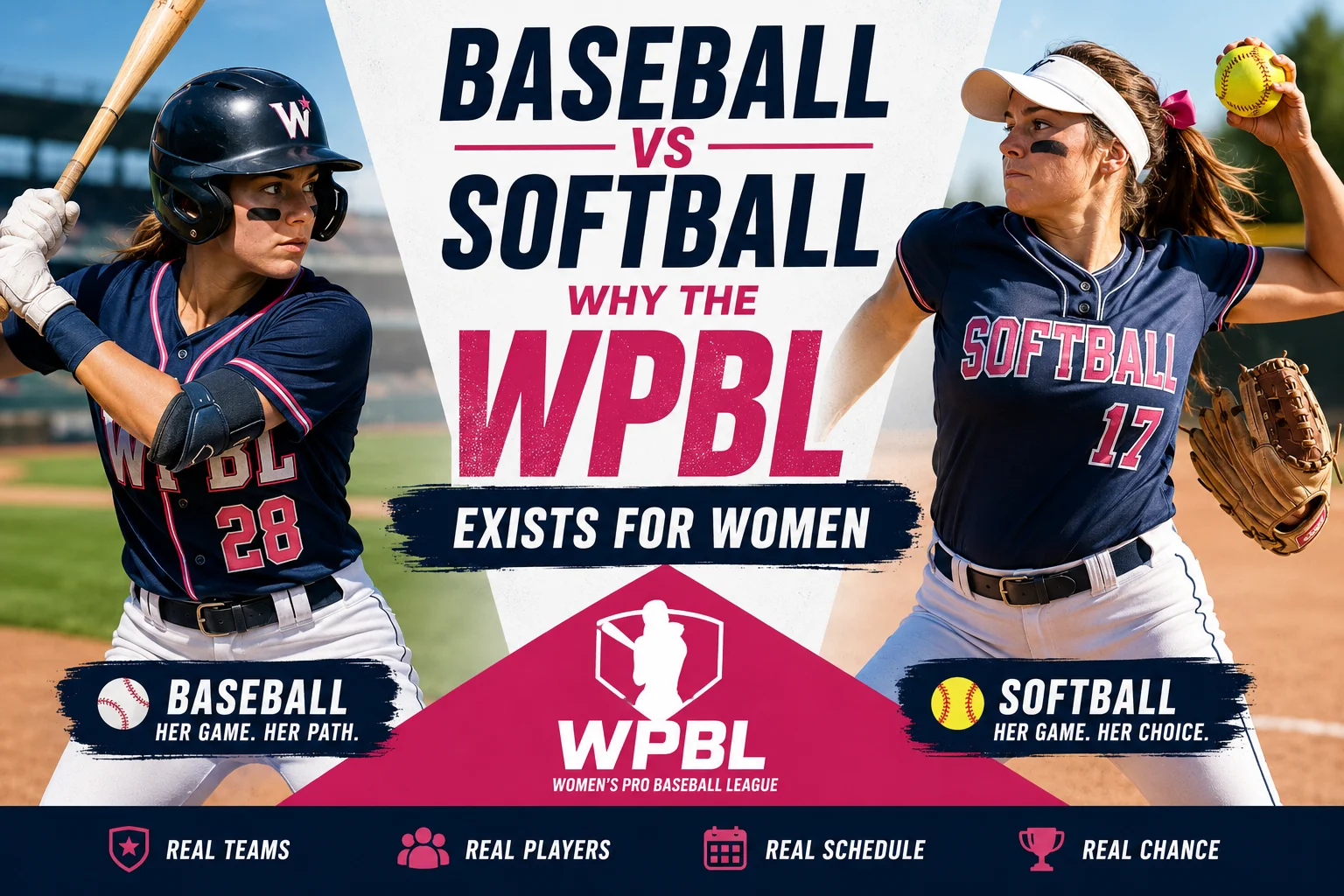
Baseball vs Softball: Why the WPBL Exists for Women Who Chose Baseball
Many girls fall in love with baseball before anyone tells them they are supposed to switch sports.
They play catch, take ground balls, swing bats, join youth teams, and learn the rhythm of baseball. Then, as they get older, many hear the same message: softball is the next step.
For some athletes, softball is the right path. It is a great sport with its own history, skill set, and professional opportunities. But for girls who love baseball, softball should not be treated as the automatic replacement.
That is why the WPBL exists.
The Women’s Pro Baseball League gives women who chose baseball a professional baseball path of their own.
Table of Contents
Baseball vs Softball: Quick Comparison
| Sport | Field/game differences | Pathway differences | Why it matters for women athletes |
| Baseball | Larger field, overhand pitching, smaller ball, longer base paths, different game rhythm | Boys and men have a long-established baseball pipeline; girls often lose access as they get older | Women who identify as baseball players need a baseball-specific path |
| Softball | Smaller field, underhand pitching, larger ball, shorter base paths, faster infield pace | Girls and women have more established school, college, and pro softball options | Softball is valuable, but it should not be the only option for girls who love bat-and-ball sports |
| WPBL baseball | Women playing baseball in a professional league structure | Tryouts, draft, teams, rosters, schedule, and playoffs | Creates a visible professional destination for women baseball players |
Baseball and Softball Are Related, But Not the Same
Baseball and softball share skills. Both require hitting, throwing, fielding, running, timing, quick decisions, and competitive toughness.
But they are not the same sport.
The pitching motion is different. The field size is different. The ball is different. The timing is different. The defensive angles are different. The player development system is different. The culture and pathways are different too.
That is why the distinction matters.
Calling softball the same as baseball ignores the identity of athletes who grew up loving baseball specifically. It also ignores the skill adjustments players make when moving between the two sports.
The WPBL exists because women baseball players deserve a league built around baseball.
Why Many Girls Were Pushed Toward Softball
Many girls start in baseball when they are young. At the earliest levels, teams are often mixed, and girls can play the same game as boys.
But as players get older, the path often changes.
In many communities, baseball teams become harder for girls to access. Schools may offer softball for girls but not baseball. Coaches may assume girls should move over. Parents may be told softball is the normal next step. Local leagues may not have enough girls playing baseball to build teams.
That is how the shift happens.
Sometimes it is a good choice. Many athletes love softball and build incredible careers there. But for others, the switch happens because baseball options disappear.
The WPBL challenges that pattern by giving baseball-first girls and women something real to point toward.
Softball Deserves Respect
This conversation should never turn into softball-bashing.
Softball is not a lesser version of baseball. It is a different sport with elite athletes, high-level skills, major college programs, professional leagues, international history, and a strong fanbase.
Many WPBL players and women baseball figures respect softball. Some have played it. Some have built athletic skills through it. Some moved from softball into baseball. Some may continue to feel connected to both sports.
The issue is not whether softball matters. It does.
The issue is choice.
A girl who loves softball should have a softball path. A girl who loves baseball should have a baseball path. Some athletes may cross between both. Some may not.
The WPBL gives baseball players their own option.
Why the WPBL Creates a Baseball-Specific Path
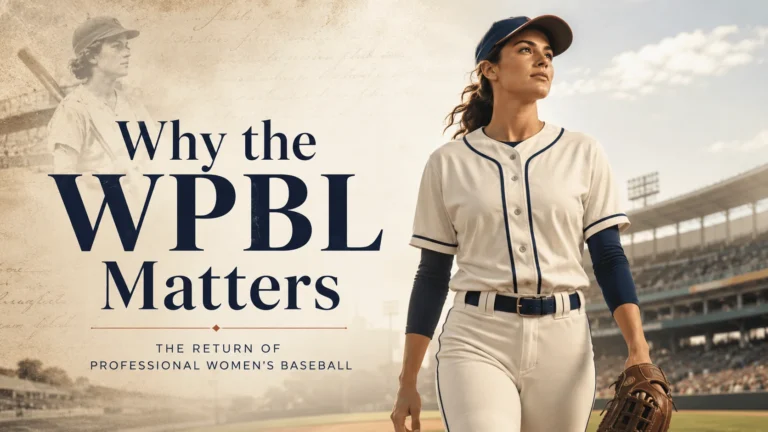
The WPBL gives women baseball players a professional destination, which helps explain why the league matters to women’s baseball history.
That matters because a sport becomes easier to pursue when the path is visible.
A young player can look ahead and see teams, rosters, professional games and an inaugural WPBL Draft that created the league’s first rosters. She can see women playing baseball without having to explain why they did not switch sports.
That visibility changes the conversation.
Instead of asking, “Why are you still playing baseball?” people can ask, “How far can you go?”
That is a major shift.
Different Players Have Different Routes
Not every WPBL player has the same background.
Some players stayed in baseball as long as they could. Some played softball and later returned to baseball. Some developed through national-team programs. Some entered baseball after strong softball careers. Some have moved between both sports and brought useful skills with them.
That variety is healthy.
It shows that the WPBL is not built around one perfect pathway. It is built around women who can play baseball, even if they arrived through different routes.
The key point is that the final destination is baseball.
Why Baseball-First Players Needed This League
For baseball-first players, the WPBL matters on a personal level.
They do not have to treat baseball as a childhood phase. They do not have to see softball as the only serious option. They do not have to explain why the sport they love is still baseball.
That sense of belonging matters.
When a player enters the WPBL, she is not an exception on someone else’s field. She is part of a women’s baseball league built for the game she chose.
That can change how players see themselves and how young fans see the sport.
Why the Distinction Matters for Young Girls
For young girls, the baseball-softball distinction is not just technical. It can shape their future.
A girl who loves baseball should be able to say that clearly. She should not feel like the sport automatically ends for her at a certain age. She should not be made to feel difficult or unusual because she wants to keep playing baseball.
The league also shows how WPBL players can help grow baseball for the next generation of girls.
That does not mean every girl will become a pro player. Most athletes in any sport do not. But having a visible top level still matters because it supports the levels below it.
When a professional path exists, the youth path becomes easier to defend.
What the WPBL Changes
The WPBL changes the conversation in several ways.
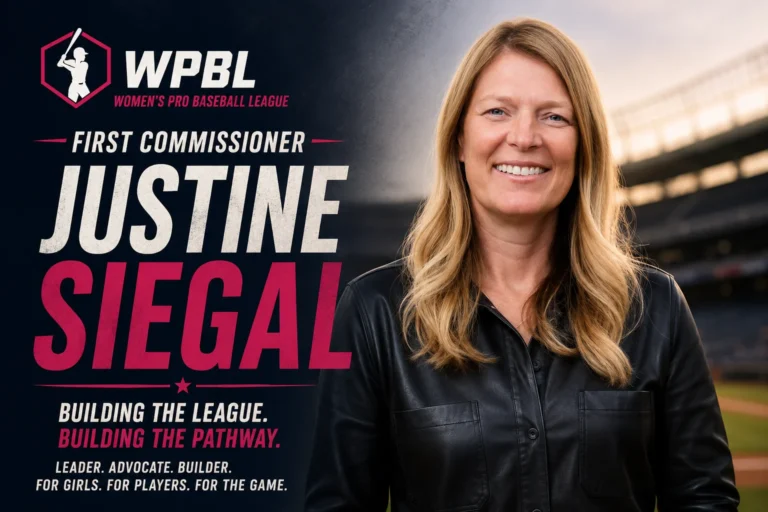
It gives women baseball players a league. It gives fans a place to follow them. It gives young girls a future image. It gives coaches a reason to develop girls as baseball players and supports the kind of girls’ baseball pathways championed by Justine Siegal. It gives families a reason to take baseball dreams seriously.
Most importantly, it separates the question of opportunity from the question of identity.
Women who love softball can play softball. Women who love baseball can play baseball.
Both sports can grow without one replacing the other.
Conclusion
The WPBL exists because baseball and softball are different sports, and women who choose baseball deserve a professional baseball path.
This is not an argument against softball. Softball is valuable, respected, and important. But it should not be the automatic answer for every girl who loves baseball.
The WPBL gives women baseball players teams, rosters, tryouts, a draft, games, visibility, and a league built around their sport.
That is why it matters.
It gives baseball-first girls and women something they have needed for a long time: a place to belong.