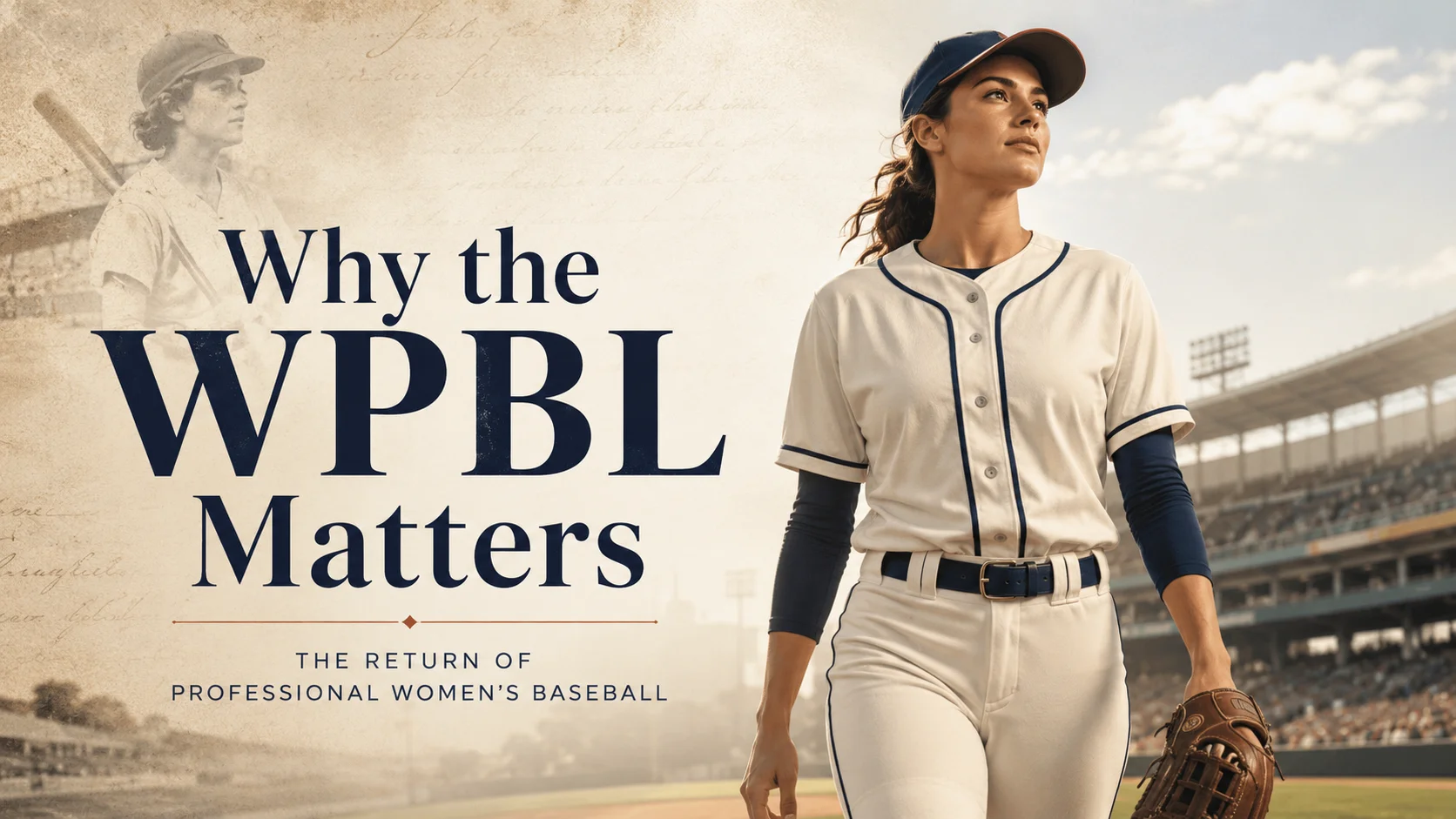
Why the WPBL Matters: The Return of Professional Women’s Baseball After More Than 70 Years
The WPBL matters because it brings professional women’s baseball back into the present.
For more than 70 years, women’s baseball has often been discussed like a memory: old teams, old photographs, old stories, and a history people respect but do not always connect to today. The Women’s Pro Baseball League changes that.
It gives current women baseball players something visible, organized, and professional to build around.
This article is not a beginner guide to every league detail. For the basics, start with the full “What Is the WPBL?” guide. This article is about why the league matters historically and why its return is bigger than one season.
Table of Contents
A Historic Return for Women’s Baseball
The WPBL is important because it represents the return of professional women’s baseball after a long gap.
Women never stopped playing baseball. That part is important. The game did not disappear from their lives. Women continued to play, coach, train, represent national teams, join tournaments, create opportunities, and stay connected to the sport in whatever ways they could.
What was missing was a clear professional league.
That absence shaped generations. When a sport does not have a visible professional destination, it becomes harder for young athletes to imagine a future. It becomes harder for parents to understand the path. It becomes harder for coaches to invest. It becomes harder for media and fans to follow the players.
The WPBL does not erase that gap, but it gives women’s baseball a new professional chapter.
Why the Long Gap Matters
A 70-year gap is not just a number. It represents years of lost visibility.
It means many girls grew up loving baseball without visible role models, which is why WPBL players can help grow baseball for the next generation of girls. It means players had to explain why they wanted to stay in baseball. It means some athletes were pushed toward other options because there was no obvious place for women’s baseball to go.
That kind of gap affects the whole ecosystem.
If there is no professional league, there are fewer role models. If there are fewer role models, fewer girls see a future. If fewer girls stay in the sport, the development pipeline becomes smaller. If the pipeline is smaller, the professional level becomes harder to build.
The WPBL matters because it puts a visible destination back on the map.
Women Baseball Players Needed a Real Path
For many women in baseball, the issue was never desire. The issue was structure.
They loved the game. They learned it early. They played with boys. They trained. They competed. Some represented their countries. Some coached. Some kept playing through small tournaments or scattered opportunities.
But a real professional pathway was missing.
That matters because talent needs a system around it. A player can be skilled, committed, and passionate, but if there is no league, no roster spot, no draft, no schedule, and no professional stage, the path becomes fragile.
The WPBL gives players a system.
It gives them teams, tryouts, a draft, rosters, coaches, games, standings, and playoffs. Those pieces may sound normal in sports, but for women’s baseball, they are exactly what make the league meaningful.
Connecting the Past to the Future
The WPBL connects two parts of women’s baseball: the history people remember and the future players are trying to build.
The past matters because women’s baseball has already had important chapters. Earlier women’s baseball leagues proved that women could play, compete, draw fans, and build teams. But after those leagues faded, women’s baseball lost a consistent professional stage.
The WPBL is not just honoring that past. It is trying to continue it.
That is why the league’s first season carries more weight than a normal sports launch. It is not simply adding another entertainment option. It is reopening a pathway that had been closed or unclear for decades.
If the league succeeds, future fans may not talk about women’s professional baseball as something that only used to exist. They may talk about it as something active, current, and growing.
Why This Is Bigger Than One Season
The first WPBL season matters, but the league’s importance goes beyond year one.
A single season can introduce the teams. A long-term league can change the pathway.
If the WPBL grows, it can influence youth baseball, coaching, scouting, training, media coverage, and how families think about girls staying in baseball. It can also give future players a reason to keep developing in the sport.
That is how sports ecosystems grow. They need more than inspiration. They need repetition, structure, and proof that the path is still there next year.
The WPBL’s first season will be historic no matter what. But its bigger impact will depend on whether it can become sustainable.
Why Fans Should Understand the History
Fans do not need to know every detail of women’s baseball history to enjoy the WPBL.
But understanding the long gap helps explain why the league matters so much to players and families.
For some athletes, the WPBL is not just a new job opportunity. It is the league they wished existed when they were younger. For some fans, it is the first time they can follow women’s baseball in a professional format. For some families, it gives their daughters a clearer reason to keep playing.
That emotional weight is real.
The WPBL will still have to earn attention through good baseball, strong operations, player stories, and fan support. But its historical importance gives the first season a meaning that goes beyond the scoreboard.
Keeping the League Basics Short
The basic WPBL facts are simple.
The league stands for Women’s Pro Baseball League. It is launching with four teams: Boston Hunters, Los Angeles Queens, New York Heights and San Francisco Firebells. The first season begins in 2026 and includes a regular season and playoffs.
Those details matter, but they are not the main focus here.
The deeper point is that the WPBL gives women baseball players a professional league after generations without a clear one. That is why its arrival feels bigger than a normal league launch. standings, track player stats, and see which teams improve as the season goes on.
Why the WPBL Matters to Current Players
For current players, the WPBL creates a place to gather and compete.
That sounds basic, but it is powerful. Women baseball players have often been spread across different countries, tournaments, national teams, coaching roles, softball backgrounds, independent events, and local baseball communities.
The WPBL brings many of those players into one visible league.
That can help fans understand the talent that already exists. It can help players build names and careers. It can help teams create rivalries. It can help the sport generate highlights, statistics, storylines, and memories.
A sport becomes easier to follow when its best players are visible in one place.
What Success Could Mean
If the WPBL succeeds, the impact could reach far beyond its first champion.
It could help more girls stay in baseball. It could strengthen the kind of girls’ baseball pathways championed by Justine Siegal, encouraging more coaches and youth programs to develop girls as baseball players. It could bring more media attention to women’s baseball. It could create a stronger player pipeline for future seasons.
It could also change the way people talk about women in baseball.
Instead of treating women baseball players as exceptions, fans could start discussing them the way they discuss athletes in any league: who can hit, who can pitch, who leads the WPBL standings, who is improving, who is clutch, who is becoming a star.
That shift is part of why the WPBL matters.
Conclusion
The WPBL matters because it brings professional women’s baseball back into public view after more than 70 years.
Women baseball players were always there. The passion was there. The talent was there. The history was there. What was missing was a visible, organized professional league built around them.
Now the WPBL gives the sport a new stage.
The first season will be about games, rosters, standings, and results. But historically, it also represents something larger: women’s baseball moving from memory back into the present.