How International Is the WPBL? Global Roots of Women’s Baseball
The WPBL is a U.S.-based professional women’s baseball league, but its first season is not only an American baseball story.
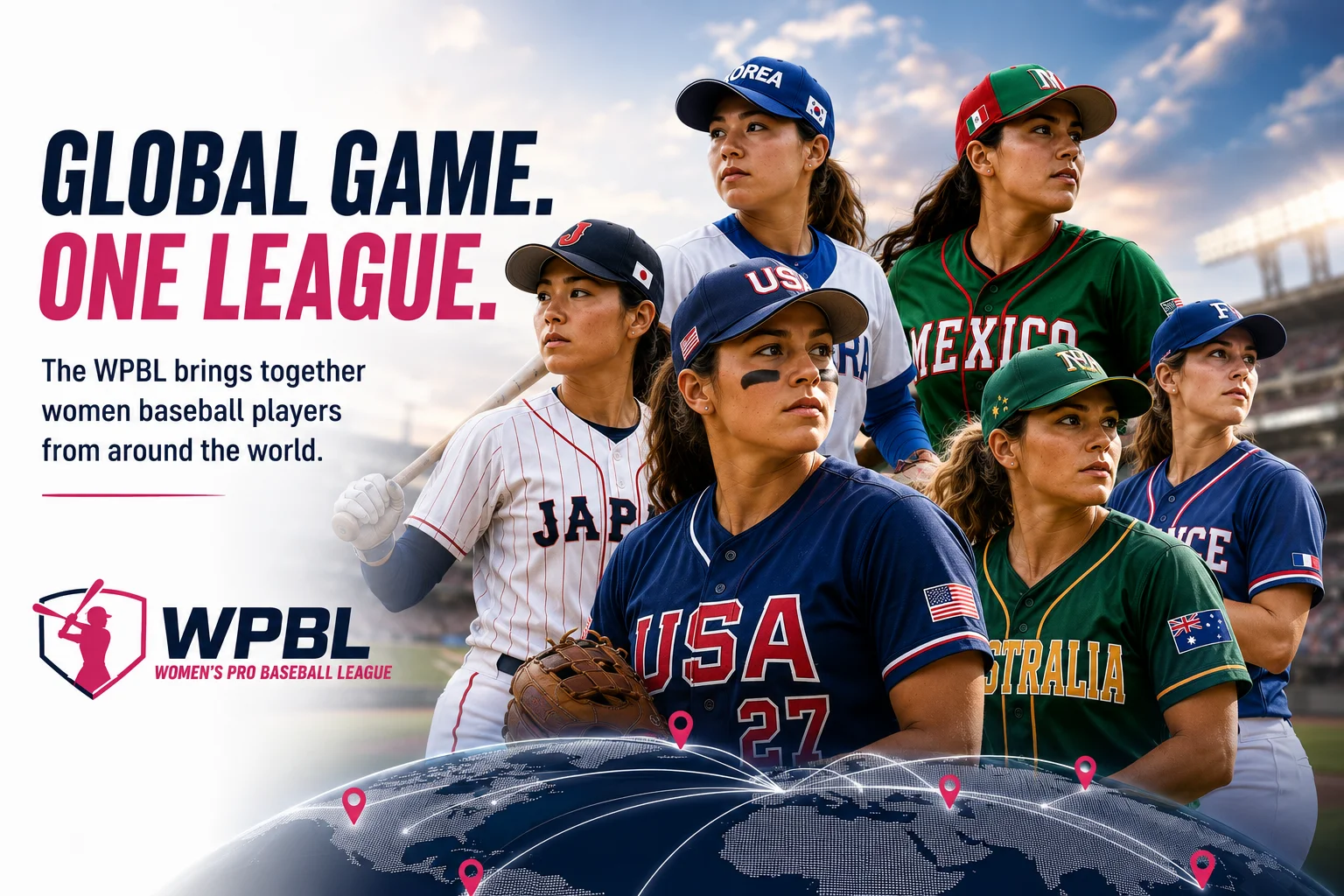
The Women’s Pro Baseball League is bringing together players shaped by different countries, national-team environments and baseball cultures. Some players come from places where baseball is part of everyday life. Others developed through national-team programs, women’s baseball communities, or competitive environments outside the United States.
That international mix matters because it makes the WPBL feel bigger than a local launch.
It gives the league different styles, different backgrounds and a wider women’s baseball identity from the very beginning.
Table of Contents
Quick Facts About the WPBL’s International Makeup
| Topic | What it means | Why it matters |
| League base | United States | The WPBL is launching from the U.S., but its player stories reach beyond one country |
| International angle | Players shaped by different countries and baseball cultures | Gives the league a broader identity from year one |
| Countries connected to early WPBL discussion | USA, South Korea, Japan, Mexico, United Kingdom, Australia, Canada, Dominican Republic, Curaçao and France | Shows that women’s baseball talent is not limited to one market |
| National-team influence | Some players have experience in international competition | Adds pressure experience, preparation habits and higher-level competition |
| Key story type | Global baseball roots, not individual biographies | Keeps this article separate from player profiles |
| Fan angle | Different styles, cultures and player pathways | Gives fans more storylines to follow during the first season |
The WPBL Is Already Bigger Than One Country
A new league often starts with a simple question: who is playing?
For the WPBL, the answer is not limited to one local talent pool. The early player picture includes women connected to different baseball cultures, national programs and international backgrounds.
That matters because women’s baseball has never belonged to just one country.
Players around the world have competed in national-team events, women’s baseball tournaments, local leagues, youth baseball, international competitions and community programs. The WPBL gives some of those paths a shared professional stage.
That makes the league more interesting.
Fans are not only watching four teams. They are watching players shaped by different baseball worlds come together in one season.
Why International Representation Matters
International representation matters because it shows that women’s baseball is not a narrow niche.
A professional league becomes stronger when it includes players with different baseball experiences. A player from the Dominican Republic may bring a culture where baseball is part of daily life. A Canadian player may bring national-team or women’s baseball community experience. A player from Japan or South Korea may bring a different training background and style of play. A player from Mexico, Australia, Curaçao, France or the United Kingdom may represent another pathway into the sport.
Those differences matter.
They can affect how players prepare, communicate, defend, run the bases, handle pressure and understand the game. They also make the league feel more connected to the wider baseball world.
For fans, international representation adds more reasons to follow.
You are not only watching local teams. You are watching different baseball cultures meet.
A League Built From Different Baseball Cultures
The WPBL’s first season can become a meeting point for players who learned baseball in different ways.
Some players grew up in countries where baseball is deeply visible. Some had to search harder for women’s baseball opportunities. Some played with boys because girls baseball options were limited. Some found the sport through national-team programs. Some built their experience through international tournaments before the WPBL existed.
That variety gives the league texture.
It also separates the WPBL from a simple domestic startup story. The league may be based in the United States, but the player backgrounds make it feel wider.
That is important for long-term growth.
A league with global roots can attract fans who care about more than one team or city. It can make young players outside the U.S. feel included. It can also show that professional women’s baseball has room for players from different baseball systems.
From National Teams to a Professional League
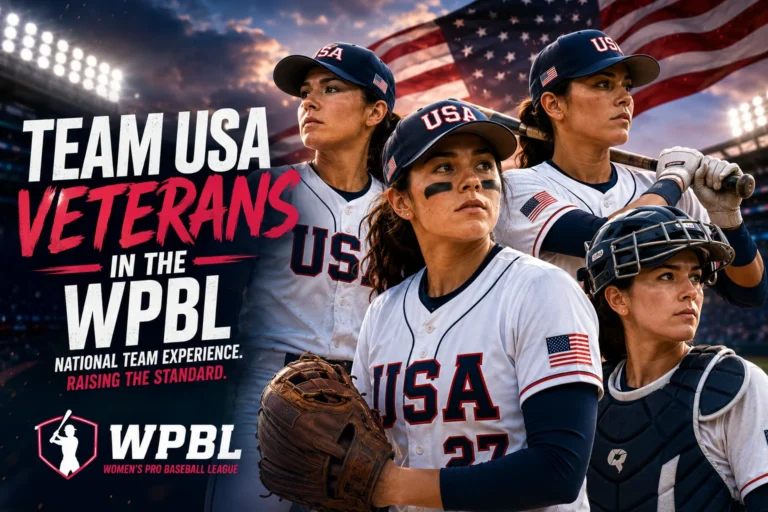
National-team baseball is one of the clearest ways international experience enters the WPBL.
In international competition, players represent countries. They face opponents from other national programs. They deal with pressure, travel, scouting, national pride and short tournament windows where every game can feel important.
The WPBL changes that setting.
Players who may have known each other from international baseball can now become teammates, league rivals or regular-season opponents. That shift is one of the most interesting parts of the first season.
The WPBL is not replacing national-team baseball.
It is giving women baseball players another stage — one where international experience can become part of a professional league season.
How International Experience Can Raise the Level of Competition
International experience can help raise the level of the WPBL because those players have already seen strong competition.
A player with national-team background may understand how to prepare for high-pressure games. She may have faced different pitching styles. She may have competed against disciplined lineups. She may have learned how to adjust quickly in tournament settings.
That can help in a new league.
The WPBL’s first season will require players to adapt fast. New teams. New teammates. New opponents. New routines. Players who have already handled international baseball environments may bring useful habits into that setting.
This does not mean international experience guarantees success.
Baseball still has to be played. A player’s country, résumé or national-team background does not automatically decide her role in the WPBL. Performance, health, team fit and adjustment still matter.
But international experience can add depth to the league’s talent pool.
Short Examples of International WPBL Storylines
This article should not become a set of full player biographies. The individual profiles can handle that.
Still, a few short examples help explain the international angle.
Joely Leguizamon and Dominican Baseball Culture
Joely Leguizamon is one of the clearest examples of baseball culture shaping a player’s identity. Her story connects Boston and the Dominican Republic, with Dominican baseball culture playing a major role in how she sees the game.
The important point is not to repeat her full profile here.
Her story shows how the WPBL can include players shaped by countries where baseball carries deep cultural meaning.
Canadian Baseball Connections
Canadian baseball is also part of the WPBL’s wider identity. Canada has a strong women’s baseball presence, and Canadian players bring another national baseball background into the league.
This matters because the WPBL can become a place where players from North American baseball systems compete together in a professional women’s league setting.
Japan, South Korea, Mexico and Other Baseball Nations
The early WPBL country picture also includes baseball backgrounds connected to Japan, South Korea, Mexico and other countries.
Those mentions matter because they show the league is not built around one style of baseball. Different countries often develop different baseball habits, strengths and approaches.
That can make the league more interesting on the field.
Wider Global Roots
The broader early country mix also includes places such as the United Kingdom, Australia, Curaçao and France.
The WPBL should not overclaim its global reach too early. It is still a new league. But the presence of multiple country connections shows that women’s baseball already has international roots the league can build on.
Why This Makes the WPBL Feel Bigger Than a U.S. Project
The WPBL is launching in the United States, but its international makeup helps it feel bigger than a local sports project.
That matters for three reasons.
First, it shows that women’s baseball talent exists across borders.
Second, it gives the league more storylines. Fans can follow players from different backgrounds, national programs and baseball cultures.
Third, it gives girls outside the U.S. a visible professional league to notice.
A young baseball player in Canada, Japan, Mexico, the Dominican Republic, South Korea, Curaçao, Australia, France or another baseball country may see the WPBL and understand that women’s baseball can have a professional destination.
That visibility is not everything, but it is a start.
What International Players Can Bring to the WPBL
International players can bring more than a flag next to their name.
They can bring:
- different training backgrounds
- national-team experience
- defensive habits from other systems
- different hitting approaches
- pitching and catching styles
- baserunning instincts
- leadership from tournament play
- cultural pride
- international fan interest
- experience adapting to new environments
That mix can help the WPBL feel less predictable.
Fans may get to watch players with different styles learn from each other, compete against each other and shape team identities in different ways.
The best version of the WPBL is not one type of women’s baseball.
It is many baseball paths meeting in one league.
Why Fans Should Watch Players From Different Countries
Fans should watch international players because they may shape the league’s first season in ways that are not obvious before opening day.
A player from a national-team background may bring composure in tight games. A player from a baseball-heavy culture may bring confidence and feel. A player who had to fight for opportunities in a smaller women’s baseball environment may bring toughness and adaptability.
Those differences can show up in small ways.
A defensive read. A baserunning decision. A pitching approach. A catcher’s communication. A player’s calmness under pressure.
International background does not automatically make a player better, but it can shape how she plays.
That is worth watching.
What This Says About the Future of Women’s Baseball
The WPBL’s international makeup says something important about the future of women’s baseball.
The sport already has players in many places. What it has often lacked is a consistent professional stage that can bring those players together.
If the WPBL succeeds, it can become part of a larger pathway.
That could matter for national teams, youth programs, coaches, families and young players who want to keep playing baseball. It could also encourage more scouting, more international attention and more serious investment in women’s baseball development.
That future is not guaranteed.
A global women’s baseball pipeline takes time. It requires visibility, support, media coverage, travel resources, youth development and competitive quality.
But the WPBL’s first season can be a starting point.
The WPBL’s Global Challenge
The international angle is exciting, but it should be handled honestly.
The WPBL is still new. One season cannot build a complete global structure by itself. International growth takes patience.
The league will need to keep supporting players, telling international stories carefully, making rosters easy to follow, and giving fans a reason to care about more than one country or one star.
It also needs to avoid turning international players into simple symbols.
Each player is more than a country label. They are athletes with positions, skills, roles, strengths, weaknesses and personal paths.
That balance matters.
The WPBL can celebrate international roots while still treating players as full baseball people.
What Fans Should Watch
Fans should watch the international angle closely during the first WPBL season.
Watch how different styles show up
Different baseball backgrounds can lead to different approaches to defense, hitting, baserunning, pitching and preparation.
Watch national-team experience
Players who have competed internationally may bring useful pressure experience into league play.
Watch international player development
Some players may need time to adjust to the WPBL format. Others may settle quickly because they already have experience in high-level environments.
Watch team chemistry
The first season brings players from different backgrounds into new teams. How quickly they communicate and build chemistry will matter.
Watch global fan interest
If fans outside the United States begin following specific players or teams, that could be important for the league’s future.
Conclusion
So, how international is the WPBL?
The league is based in the United States, but its first season is shaped by players and baseball backgrounds connected to multiple countries, national-team environments and global baseball cultures.
That makes the WPBL feel bigger than a local launch.
It gives fans more storylines, gives players a shared professional stage and gives young girls outside the United States a league they can see and follow.
The WPBL’s global future is still being built.
But the first season already shows that women’s baseball is not limited to one country. It is a game with international roots, and the WPBL has a chance to bring those roots together.