How Banana Ball Is Preparing WPBL Players for the Inaugural Season
Some WPBL players are not entering the league from a quiet offseason.
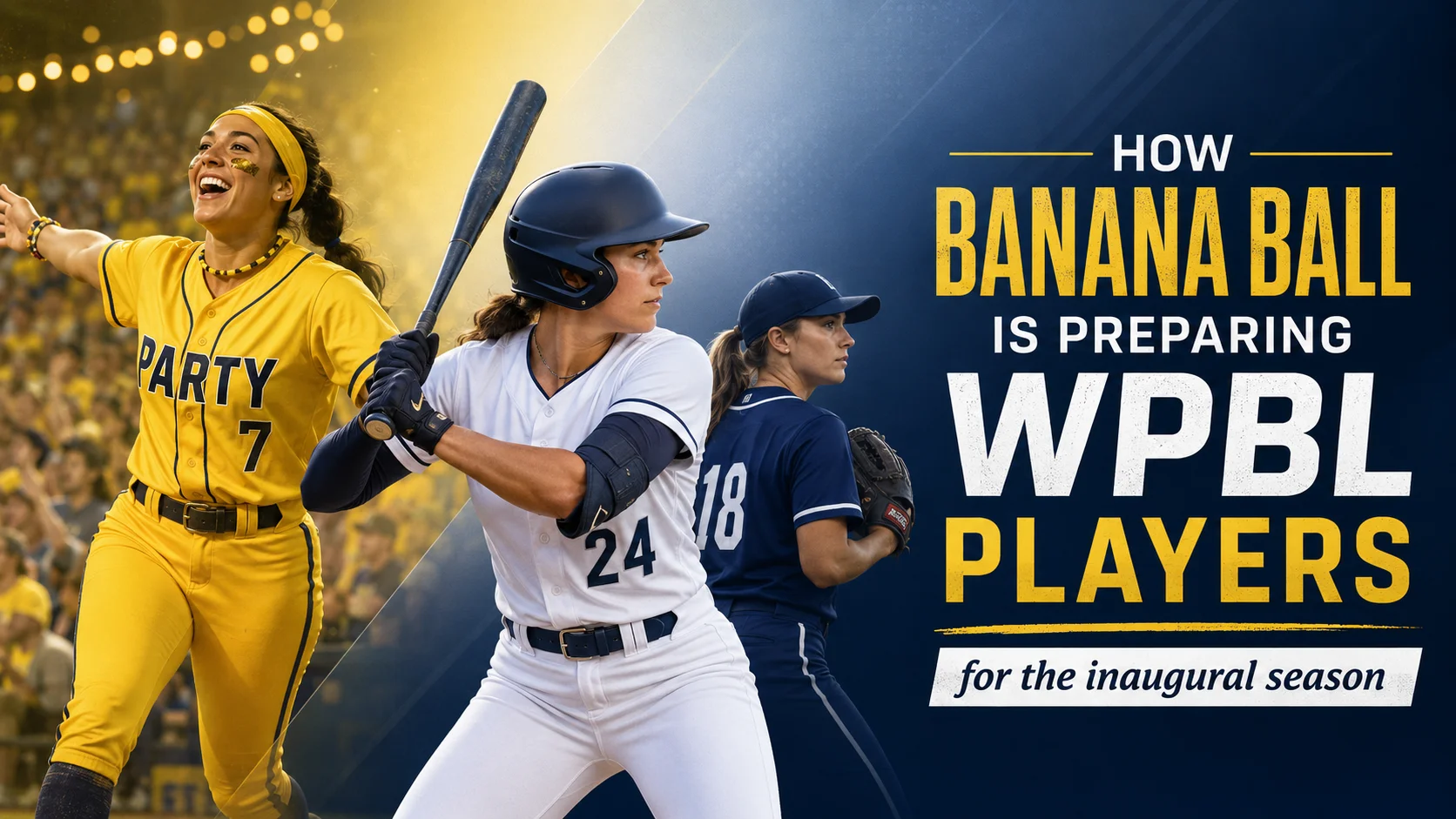
Before the Women’s Pro Baseball League begins its first season, several players connected to the league have already spent time in Banana Ball, one of the loudest and most fan-focused baseball environments in the country.
That experience does not make Banana Ball the same as the WPBL. It does not guarantee success. But it may give some players useful preparation in areas that matter for a new league: live game reps, crowd pressure, travel routine, media comfort, fan interaction and confidence.
For a first-year professional women’s baseball league, those details can matter.
Table of Contents
Why Banana Ball Experience Could Help WPBL Players
A new league brings a different kind of pressure.
WPBL players are not only preparing to compete. They are also helping introduce professional women’s baseball to many fans who may be watching seriously for the first time.
That means players need more than baseball ability. They need to handle attention. They need to connect with fans. They need to explain the league, represent the sport and stay composed while people are learning what the WPBL is.
Banana Ball can help with that because it puts players in public, high-energy baseball settings again and again.
Players are around fans. They are around cameras. They travel. They perform. They adjust to noise. They learn how to stay loose when the environment is unpredictable.
Those are not replacements for baseball skill. But they are useful habits before a new league begins.
Live Game Reps Before the WPBL Season
The most direct benefit of Banana Ball is live baseball activity.
Training matters, but live reps are different. Hitters need to see pitching. Fielders need game speed. Catchers need rhythm. Players need to react, reset and compete in real time.
Banana Ball may be entertainment-driven, but players still have to play. They still need timing, hand-eye coordination, defensive awareness and confidence in live situations.
For WPBL players, that can be valuable before the inaugural season. Instead of only training privately, they have been getting on-field reps in front of people.
That does not mean Banana Ball perfectly matches WPBL competition. It does not. But staying active in live baseball can help players avoid feeling rusty when the season arrives.
Playing in Front of Large Crowds
Banana Ball crowds are loud, involved and close to the action.
That matters because crowd experience can change how a player feels on the field. Some athletes are comfortable in quiet settings but tighten up when the lights, cameras and noise arrive. Others learn how to use that energy.
Banana Ball gives players practice in that kind of atmosphere.
They are not playing in front of empty seats. They are playing while people cheer, record, laugh, react and wait for moments. The attention is constant.
The WPBL will be different, but its opening season will carry its own spotlight. Fans, media and young players will be watching because the league represents something new and important for women’s baseball.
Players with big-crowd experience may be better prepared for that feeling.
Travel Routine and Staying Ready
Life on the road before the WPBL season is one of the most underrated parts of professional preparation.
It sounds simple from the outside, but it affects everything: sleep, food, hydration, recovery, soreness, energy and timing. A player can be talented and still struggle if travel breaks her routine.
Banana Ball gives players real experience with movement from city to city, changing schedules and performing when conditions are not perfect.
That can help WPBL players because the league season will not be only about the games. It will also be about the days between games. Players will need to manage their bodies, stay healthy, stay prepared and keep their focus.
Travel routine is not glamorous, but it matters.
A player who already understands how to stay ready on the road may adjust faster when the WPBL season begins.
Media Comfort and Public Attention
The WPBL will need player stories.
New leagues do not have decades of history to rely on. Fans need to learn who the players are, why the league matters and what makes each team worth following.
That puts players in a more public role.
Banana Ball can help because its players often become part of social clips, interviews, fan conversations and public storytelling. They get used to being seen as people, not just athletes in uniforms.
That kind of comfort can be useful in the WPBL.
A player who can speak naturally, answer questions, handle cameras and share her story can help fans connect with the league faster. That does not replace performance, but it helps build interest.
In a first-year league, that matters.
Handling Pressure Situations
Banana Ball is unpredictable.
There can be music, crowd reactions, unusual moments, performance elements, fast changes and constant energy. Players have to stay calm while the environment around them keeps moving.
That can help with pressure.
Baseball already requires emotional control. A hitter has to reset after a bad swing. A pitcher has to move on after a missed spot. A defender has to stay ready even after a mistake.
In the WPBL’s first season, the pressure will not only come from the scoreboard. It will also come from the attention around the league.
Players with Banana Ball experience have already practiced staying composed in public, high-energy situations. That may help them handle the mental side of a new professional league.
Fan Interaction and Building a New League
Fan interaction is one of Banana Ball’s biggest lessons.
Players learn to sign, smile, talk, take photos, answer questions and make fans feel part of the experience. That may sound small, but it is important for the WPBL.
The league will need fans to form attachments quickly. People need to learn names. Families need reasons to come back. Young girls need players they can recognize and follow.
Players who already understand fan connection can help make that happen.
The WPBL’s long-term growth will depend on the quality of baseball, but fan relationships will also matter. A new league cannot afford to feel distant. It needs players who can make supporters feel close to the sport.
Banana Ball gives some players experience doing exactly that.
Confidence and Visibility
Confidence is not only about believing you can play. It is also about feeling comfortable being seen.
Banana Ball puts players in visible situations. They are part of a show. They are watched closely. Their personalities matter. Their reactions matter. Their connection with fans matters.
For WPBL players, that visibility can be useful.
Women’s baseball is still fighting for attention. Players are not only competing for their teams; they are helping show that women’s baseball deserves a bigger stage. That can be a heavy responsibility.
Banana Ball experience may make that responsibility feel more familiar.
Players who have already been visible in front of big crowds may be more comfortable stepping into the WPBL spotlight.
Short Player Examples
Ashton Lansdell is a useful example because she connects Banana Ball, Team USA experience and the WPBL. Her time around crowds, travel and public-facing baseball could help her adjust to the league’s first season.
Denae Benites is another example. Her Banana Ball experience has been tied to live reps, consistency and confidence before bigger baseball opportunities.
Kelsie Whitmore and Val Perez also belong in the wider conversation of players connected to both women’s baseball visibility and the WPBL.
This article is not meant to list every crossover player; readers can see the full group of Banana Ball players joining the WPBL separately. The point is that Banana Ball experience may give some WPBL players a different kind of preparation before the first season begins.
What Banana Ball Experience Does Not Guarantee
Banana Ball experience can help, but it does not guarantee WPBL success.
The WPBL will still be decided by baseball performance, results and movement in the WPBL standings.
Hitters will need timing, plate discipline, contact quality and adjustment. Pitchers will need command, stamina and the ability to handle lineups. Defenders will need footwork, range, communication and accuracy. Teams will need chemistry, strategy and consistency.
Crowd comfort does not replace hitting.
Fan interaction does not replace defense.
Media experience does not replace pitching command.
Travel toughness does not automatically lead to production.
That distinction is important. Banana Ball may prepare players for visibility, pressure and public attention. The WPBL will test them in a professional women’s baseball structure.
Both things can be true.
How This Helps the WPBL as a New League
The WPBL benefits from players who already know how to be visible.
A new league needs talent first, but it also needs personality, trust and connection. Fans have to care about the players before rivalries and traditions fully develop.
Banana Ball-experienced players may help with that because they already understand public-facing baseball. They know fans connect with people, not just box scores.
That can help the WPBL in its first season.
Players who are comfortable with crowds, interviews, travel and fan interaction can help turn curiosity into support. They can help explain the league to new fans. They can make women’s baseball feel more accessible.
That is not a small advantage for a league trying to build from the ground up.
What Fans Should Watch During the First WPBL Season
Fans should watch how Banana Ball experience carries into the WPBL.
The key questions are about adjustment.
Do live reps help players stay sharp? Does crowd experience reduce opening-day nerves? Does travel routine help players stay consistent? Does fan interaction help certain players build followings? Does media comfort help the league tell better stories?
Those are the details worth watching.
Banana Ball and the WPBL are not the same. But some of the habits learned in Banana Ball could matter during the WPBL’s first season.
Conclusion
Banana Ball is not the WPBL.
It is louder, looser and more entertainment-driven. The WPBL is a professional women’s baseball league with a competitive season, teams, rosters and standings.
But Banana Ball may still be preparing some WPBL players in useful ways.
It gives them live reps. It puts them in front of crowds. It teaches travel routine. It builds media comfort. It creates fan interaction. It helps players stay loose under pressure and become comfortable with visibility.
None of that guarantees performance.
But in a new league, players need more than talent. They need composure, adaptability, personality and the ability to help fans care.
Banana Ball has given some WPBL players practice in exactly those areas.